How to Raise a Healthy Doberman?
The Doberman Pinscher is frequently praised because of its sleek, athletic physique and noble stature. But beneath these muscles is a smart, faithful, and loving friend. To raise a healthy Doberman is not only about exercise and food, but it is also about understanding their body, mind, and individual emotional needs. Whether you are looking for Doberman puppies near me or already have an adult dog and want to provide the best care, focus on science-based care so they can live a full and happy life. This guide will help you do this.
Learning the Special Character of the Doberman.
Dobermans have an incredible combination of strength, intelligence, and sensitivity that few other breeds can match. They are highly aware and deeply loyal creatures because the breed was developed as a vigilant protector and loyal friend. This combination of power and sensitivity demands balance from owners who must provide solid direction without eroding trust. Balancing these two sides helps prevent behavioral problems and builds a confident, loving dog grounded in mutual understanding and respect.
Dobermans are working dogs that require a well-organized lifestyle, as they are mentally engaged and physically active. They also thrive when given meaningful tasks like obedience trials, scent games, or agility training. These activities not only stimulate the mind but also reinforce discipline and concentration. In the absence of mental and physical activity, frustration may lead to restlessness or undesirable behaviors that disturb their natural balance and composure.
Practical tip: Combine physical exercise with emotional attachment to raise their harmonious temperament. Security and trust are established through morning jogs, interactive play, and relaxing evening downtime. Once a Doberman is part of everyday life, challenged mentally and physically, it becomes resilient and deeply bonded, nothing can shake them except separation from their human family.
Laying the Foundation: Puppy Care That Shapes the Future.
Rearing a Doberman puppy is an investment in their future life. It begins by developing a strong foundation, where early choices about health, socialization, and training shape their future behavior and well-being. From the first day, establishing a routine of veterinary sessions, social experiences, and training will help prevent behavioral issues in the future.
Vaccination and vet visits: The initial move towards your puppy’s health is taking it to the vet as soon as it joins your family. The vaccination schedule for their immunity and discussing flea control and deworming early to protect their health, are essential. Check-ups within the first year also enable early detection of any possible problems, which gives you peace of mind.
Socialization is a major contribution towards the development of a Doberman. Exposing your puppy to new things, new people, and other friendly dogs will help them come out of their shell and reduce anxiety. Such an early exposure creates a well-adjusted dog that will be adaptable to different situations without fear or aggression in the future.
Positive reinforcement training creates the foundation for a well-adjusted adult dog. Dobermans respond best to calm, consistent leadership and positive rewards. Use rewards and praise to reinforce good behavior and discourage unwanted actions—without harsh corrections.
Pro tip: It is always better to build good habits early in life; this sets up a well-adjusted Doberman. Given the proper background, your puppy will become a good, well-rounded adult who trusts and respects you.
Nutrition 101: What Doberman’s diet Should Really Be Like.
Nutrition is the foundation of your Doberman’s health. These are highly active, muscular dogs that need a balanced diet that sustains their energy and supports a long, healthy life. Having a good diet makes sure your Doberman stays healthy, active, and strong.
Key Dietary Needs
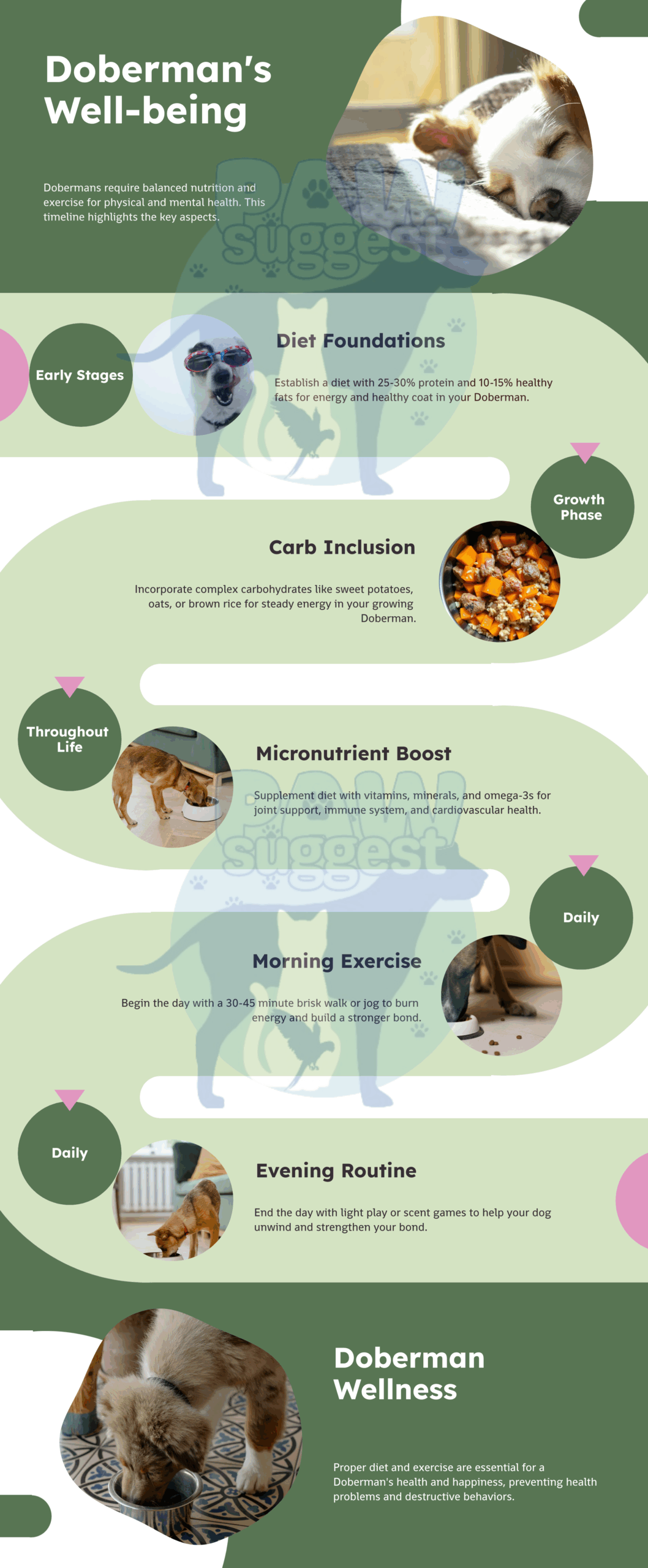
Protein (25-30%) is required to sustain and develop muscle to support the high energy requirements and maintain the overall strength of the dog.
Healthy fats (10-15%) provide energy and keep the coat healthy, so your Doberman’s hair looks shiny, and the skin is hydrated.
Complex carbohydrates, such as sweet potatoes, oats, or brown rice, provide steady energy and are beneficial to support your dog’s body throughout the day without causing spikes in blood sugar.
Micronutrients (vitamins, minerals, and omega-3s) support healthy joints, a robust immune system, and a healthy cardiovascular system, helping your Doberman remain active and agile.
Choosing the Right Food
When feeding your Doberman, you need to consider high-quality meat-based foods and avoid fillers like corn or soy. Choose foods made with healthy ingredients, such as real meat, vegetables, and healthy fats. Raw feeders must emphasize the right calcium-to-phosphorus ratio to support proper bone and joint development and protect long-term health.
Practical hint: Adjust your Doberman’s portions monthly based on activity level. A fit, lean dog will still stay active and help prevent excess weight, reducing the risk of joint or heart issues. Always monitor their weight and ask your vet to help adjust portions.
Working Out the Right Way: Exertion and Energy vs. Protection.
Dobermans are active, athletic dogs, and must have the right balance of exercise to stay physically and mentally fit. Nevertheless, one should not overdo it, particularly when it comes to young dogs, to protect their developing joints. Being healthy and happy is being smart and moving in balance.
Daily Routine Ideas
Morning: Wake up by taking a brisk 30-45 minute walk or jog to use excess energy and to get their heart pumping. This will aid in establishing the right mood for the coming day and will allow you to bond even more strongly.
Afternoon: Provide mental enrichment for your Doberman, e.g., puzzle toys or obedience training. These activities keep their smart minds active and prevent boredom or destructive behavior.
Evening: The day should end with light play or scent games to help them unwind and avoid overstimulation before going to sleep. Bonding and trust-building are also possible through such activities.
In their growth stages, it is advisable to avoid high-impact activities such as jumping or rough games. These may put a strain on developing joints and bones. When they are adults, running, hiking, and swimming are some of the activities that can be introduced at an early age to help them stay in top physical shape.
Pro tip: Consistency is key. Dobermans thrive on structure, and a predictable workout regimen will stop anxiety and destructive behavior. Inconsistent routines can unsettle them and cause restlessness.
Grooming: It’s Not Just About a Shiny Coat.
Although Dobermans have short coats that need minimal grooming, regular maintenance is important for their general health. Bathing and grooming not only keeps your Doberman looking good but also maintains skin health, prevents infections, and strengthens the relationship between you and the dog. Regular attention ensures that they are comfortable and clean.
Grooming Essentials
Brushing: Brush your Doberman 1-2 times a week with a rubber-grooming mitt to remove loose hair and spread natural oils. This prevents shedding as well as keeping their coat shiny.
Bathing: Bathing every 6-8 weeks or on demand with a dog-safe, mild shampoo is enough to keep their coat and skin healthy without removing essential oils. Their skin might be dried up by overbathing, so stick to the recommended frequency.
Ears, Nails: Clean the ears of your Doberman every week to avoid the accumulation of wax and infection. Trim their nails every 2-3 weeks to prevent overgrowth, which can cause discomfort or even injury.
Dental Care: Brush your Doberman’s teeth or offer dental chews a few times a week. Oral hygiene helps prevent bad breath, tartar, and dental diseases, maintaining long-term good health.
Ticks and fleas are also an issue you’ll face while grooming your doberman. For that, you must check out this article: Powerful Natural Remedies for Fleas in Dogs You Must Try!
Bonus tip: Bonding with your Doberman through grooming is also a great idea. Spend this period bonding on an emotional level, talking with a calm voice, praising, and making the experience positive. This will make grooming fun and stress-free for both of you.
Mental Stimulation: Keeping Their Mind Sharp and Happy.
Dobermans are intelligent dogs and require their minds to be challenged to remain happy and balanced. They may develop behavioral problems like destructive or anxious behavior when bored or under-challenged. A healthy, well-behaved dog must exercise their mind regularly.
Practical Ways to Engage Them.
Games: Interactive games (puzzle feeders, scent-based games, etc.) are ideal to keep your Doberman intellectually stimulated at mealtimes. These toys test their problem-solving skills and make them earn their food and engage their natural instincts.
Training ideas: Teach some new tricks, try agility, or nose work to keep the brain active. Training also helps build the relationship between you and your dog and enhances the focus, discipline, and new skills of your dog.
Socialization: Take your Doberman to new places and let them meet new dogs often. This will make them gain confidence, learn good social skills, and reduce anxiety or aggression in new situations. Socialization is important in ensuring their mental health.
Pro tip: To prevent boredom, rotate toys every few days. Even basic toys, such as a frozen Kong stuffed with treats, can give hours of mental stimulation and fun without spending a lot of money.
Emotional Well-being: Meeting Their Need for Connection.
Dobermans are very loving and emotional dogs. They establish strong bonding relationships with their families and need frequent emotional connections to feel safe. Without enough attention and emotional engagement, they may become anxious, depressed, or even destructive, which harms their overall well-being.
Actionable measures to enhance emotional well-being.
Do not leave your Doberman alone for long periods: Prolonged solitude can lead to separation anxiety. When you are too busy, you can hire a dog walker or pet sitter to keep your dog company when you are not around, so your dog stays emotionally balanced.
Maintain calm, assertive energy: Dobermans are very sensitive to their owners’ feelings and actions. Being relaxed and confident helps them feel better and less stressed. Your behavior directly affects their moods, so staying composed helps them feel safe.
Provide safe, cozy spaces: A comfortable bed or a crate (when used properly) gives your Doberman a safe place to retreat. This personal space gives them a sense of safety, especially when they feel oppressed or tired.
Keep in mind: Emotional well-being is another important factor for your Doberman. It is not just a luxury, but it is a part of their stability and happiness. Indeed, by taking care of their emotional needs, you will have a well-rounded, balanced dog.
Health Problems to Watch For.
Dobermans are generally healthy dogs, though the breed is prone to certain specific health issues. Early detection and proactive care can prevent complications and support a long and healthy life for your dog.
Key Conditions
Dilated Cardiomyopathy (DCM): It is a serious heart disease that impairs the heart’s ability to pump blood and can lead to heart failure. Regular echocardiograms (cardiograms) are very important, particularly for middle-aged and older dogs, to detect the early signs and treat the condition.
Hip Dysplasia: This is a genetic disorder in which the hip joint fails to develop normally, causing arthritis. Exercise, proper nutrition, and maintaining a healthy weight are some of the vital factors in reducing symptoms and delaying joint destruction.
Hypothyroidism: This common hormonal disorder in Dobermans is characterized by decreased metabolism. Observe such symptoms as lethargy, weight gain, and coat changes. It can be treated successfully through early diagnosis and medication.
Bloat (Gastric Torsion): This is a potentially fatal condition in which the stomach twists, leading to the buildup of gas. To reduce risk, feed smaller portions twice a day, avoid strenuous exercise just after eating, and be aware of symptoms such as restlessness or a distended belly.
Hack: Although your Doberman may appear to be in excellent health, make an appointment once a year. Preventive care helps detect health issues at an early stage, so treatment can extend your dog’s life and quality of living.
Feeding Schedule and Hydration Habits.
Regular eating routines and adequate hydration are essential to the health and well-being of your Doberman. A proper diet and hydration help sustain energy, muscle tone, and digestion, and keep the body functioning well.
Puppies: Provide 3-4 small meals per day. This helps maintain stable energy levels during the day, which supports growth, development, and metabolism. Smaller meals also reduce the chances of overeating and aid in digestion.
Adults: Feed two balanced meals a day, preferably at the same time. This framework supports digestion and muscle maintenance, and it discourages over- or undereating that can cause weight or energy problems.
Water: Have clean and fresh water available all day long. Promote consumption of fluids, especially after physical activity, to maintain optimal hydration and support recovery, thereby mitigating the risk of dehydration-related health issues.
Precaution: Free-feeding may cause overeating, weight gain, and poor digestion. Dobermans perform better when there is a regular feeding program, which helps control the amount of calories they consume and ensures they do not become overweight.
Training with Heart: Building a Relationship Founded on Respect.
As well as being very smart, Dobermans are also emotionally sensitive. They respond best to positive reinforcement and gentle training. Respectful training builds trust and a deeper connection and understanding.
Practical Training Tips
Make the sessions brief and lively (10-15 minutes): Dobermans are active and may become distracted during long sessions. Short, focused training sessions keep them engaged and not frustrated, as they are always eager to learn.
Use praise, treats, and enthusiasm—not punishment: Positive reinforcement strengthens the bond and encourages desirable behavior. Rewarding good behaviors with praise or treats motivates Dobermans to repeat them, while punishment can cause anxiety and confusion.
Be consistent with cues and routines: Consistency in commands and routines helps Dobermans understand expectations. Using the same cues consistently speeds up learning and makes training more effective by providing direction.
The training should be a collaborative process, not a dominating one. When your Doberman feels respected and valued, they will surely follow your direction and work with you.
Senior Doberman Care: Aging Gracefully.
Dobermans in their senior stages of life (around 7 years and older) have different needs. Older Dobermans must be kept at a healthy weight since excess weight can put stress on the joints. Joint supplements and keeping them lean will be a regular routine to help manage arthritis or hip dysplasia. The proper exercise and a balanced diet will also ensure they remain strong and energetic.
Older Dobermans need gentle, regular exercise. They should go for daily walks instead of running intensively so their muscles stay toned without straining their joints. Also, they will be given a soft and comfortable bed. Keep food and water within easy reach to reduce strain. Routine veterinary check-ups every half year are essential to monitor your Doberman’s health, catch early signs of aging, and keep your old Doberman alive.
The Heart of Doberman Care: Love, Consistency, and Presence.
Beyond food, play, or vitamins, your Doberman’s greatest need is you—your presence, affection, and love. This breed thrives when included as an inseparable part of the family. A Doberman is not only going to keep you safe and warm but will also be a constant companion; all they demand is to be part of you and your world.
If you are a busy or work-oriented person, you can also opt for boarding and kennel facilities around your area!
Final Verdict: Raising a healthy Doberman is not about checking items on the list; it is about fostering a relationship. Your daily love, attention, and care will develop a relationship that offers unmatched loyalty, elegance, and companionship. Are you willing to love your Doberman? Take this initial step today—the heart of your dog will be waiting for your presence.!!