
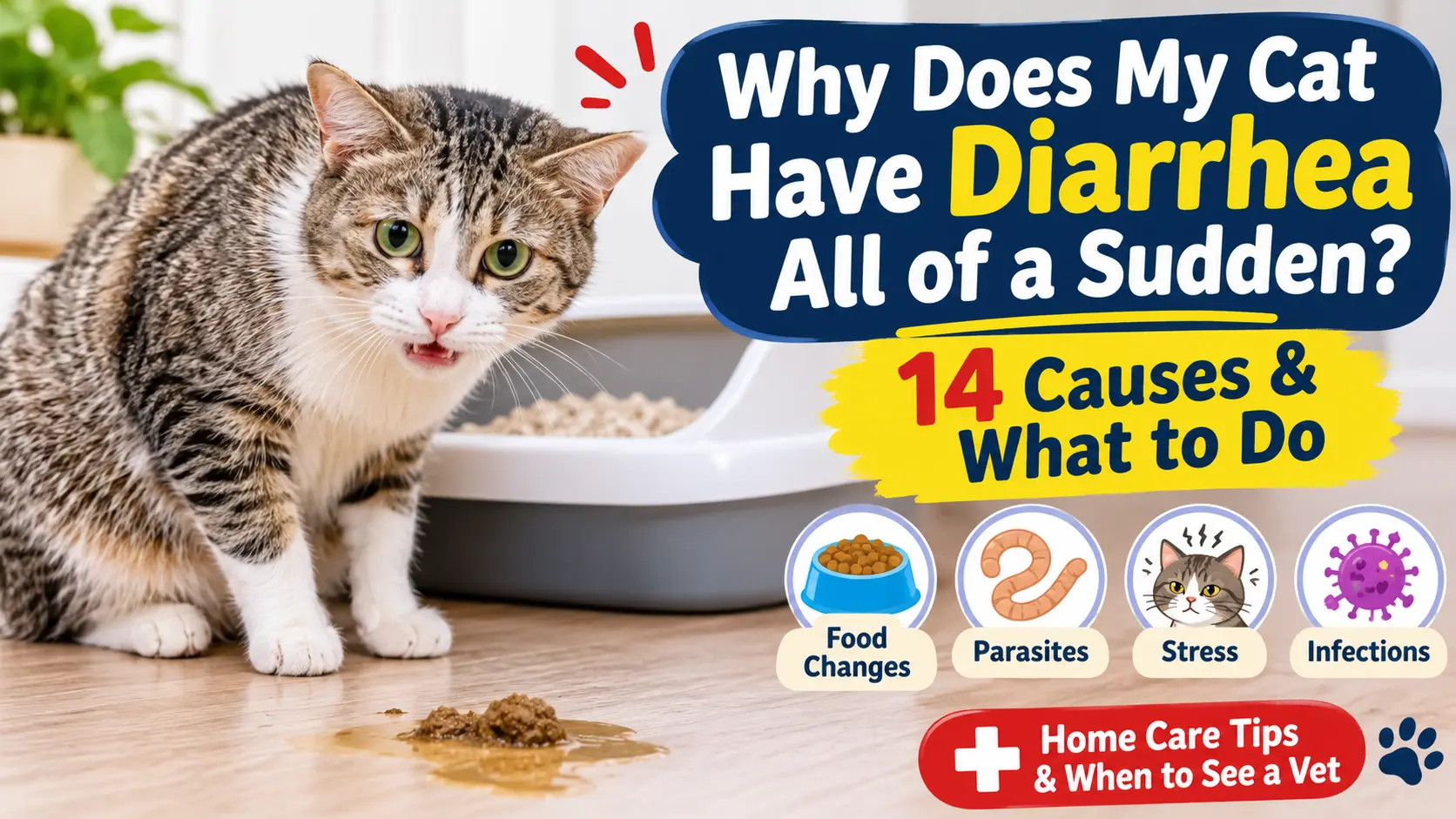
Finding loose or watery poop in your cat’s litter box can be worrying, especially when your cat was completely healthy just a day ago. You may start wondering, why does my cat have diarrhea all of a sudden, and whether something serious is happening.
Sudden diarrhea in cats can happen for many reasons. Sometimes, it is caused by a sudden food change, eating something unusual, stress, or a mild stomach problem. However, diarrhea can also be linked to intestinal parasites, infections, food allergies, or other health conditions.
A single episode of loose stool may not always be serious, but repeated watery diarrhea can cause dehydration and make your cat weak.
In this guide, we will explain 14 common reasons why cats suddenly develop diarrhea, the warning signs to watch for, what you can do at home, and when your cat needs veterinary attention.
Why Does My Cat Have Diarrhea All of a Sudden?
Cats develop diarrhea when food and waste move through their intestines too quickly or when the digestive system cannot absorb enough water.
As a result, the stool becomes soft, loose, or watery instead of having its normal shape.
Sudden diarrhea can develop within a few hours or appear after a recent change in your cat’s food, environment, or health.
Some common causes include:
- Sudden changes in cat food
- Eating spoiled or unusual food
- Food allergies or intolerance
- Stress and anxiety
- Intestinal worms
- Bacterial or viral infections
- Drinking contaminated water
- Eating too much
- Side effects of medication
- Inflammatory bowel disease
- Pancreatic problems
- Exposure to toxic substances
- Digestive problems in older cats
- Other underlying health conditions
Let’s look at these causes in detail.
14 Common Causes of Sudden Diarrhea in Cats
1. Sudden Change in Cat Food
One of the common reasons for sudden diarrhea is changing your cat’s food too quickly.
Cats have digestive systems that may need time to adjust to new ingredients. If you suddenly replace your cat’s regular food with a different brand or type, the change may upset its stomach.
For example, your cat may normally eat dry food, but you suddenly start giving it a different wet food. This change can cause loose stools in some cats.
Possible signs include:
- Soft or watery poop
- More frequent litter box visits
- Mild stomach discomfort
- Changes in appetite
- Occasional vomiting
What should you do?
Introduce new food gradually over approximately 7–10 days. Mix a small amount of the new food with the old food and slowly increase the new food.
If diarrhea continues or becomes worse, contact your veterinarian.
2. Eating Spoiled or Unusual Food
Cats are curious animals. Sometimes, they eat things they find around the house, outside, or in the kitchen.
Eating spoiled food, garbage, or unsuitable human food can upset their digestive system.
Some foods may also contain bacteria or ingredients that cats cannot digest properly.
Common signs include:
- Sudden diarrhea
- Vomiting
- Stomach discomfort
- Reduced appetite
- Unusual tiredness
Some human foods are toxic to cats, including onions, garlic, chocolate, and alcohol.
If you suspect your cat has eaten something poisonous, contact a veterinarian immediately. Do not wait for symptoms to become worse.
3. Food Allergies or Food Intolerance
Some cats have difficulty tolerating certain ingredients in their food.
Food intolerance means a particular ingredient does not agree with the digestive system. A food allergy involves an immune system reaction.
Common food proteins that may cause reactions in some cats include chicken, beef, fish, and dairy products.
Possible symptoms include:
- Repeated diarrhea
- Soft stools
- Vomiting
- Itchy skin
- Excessive scratching
- Hair loss in some cases
A veterinarian may recommend a special food trial to identify the ingredient causing the problem.
Avoid changing your cat’s food repeatedly without a plan because it can make the problem harder to identify.
4. Stress and Anxiety
Stress can affect a cat’s digestive system.
Cats are sensitive to changes in their surroundings. Even small changes can make some cats anxious.
Common stress triggers include:
- Moving to a new home
- Introducing another pet
- Loud noises
- Visitors
- Changes in daily routine
- Traveling
- Changing the location of the litter box
Some cats may develop diarrhea when they experience stress.
What can help?
Give your cat a quiet and comfortable place to relax. Keep feeding times consistent and provide access to clean water.
If diarrhea continues, do not assume stress is the only cause. A veterinarian should check for other possible problems.
5. Intestinal Worms and Parasites
Intestinal parasites are another important cause of diarrhea in cats.
Parasites live inside the digestive system and can affect how the body absorbs nutrients and water.
Common intestinal parasites include:
- Roundworms
- Hookworms
- Tapeworms
- Giardia
- Coccidia
Kittens are particularly vulnerable to some parasite infections.
Common warning signs include:
- Loose or watery stool
- Mucus in poop
- Weight loss
- Swollen belly
- Poor appetite
- Vomiting
- Poor growth in kittens
A veterinarian may examine a stool sample to identify parasites and recommend the correct treatment.
Do not give human deworming medicine to your cat.
6. Bacterial Infections
Certain bacteria can infect a cat’s digestive system and cause sudden diarrhea.
Cats may become exposed to harmful bacteria through contaminated food, water, infected animals, or dirty environments.
Some bacterial infections can cause mild digestive problems, while others may make a cat seriously ill.
Possible symptoms include:
- Frequent diarrhea
- Watery stools
- Vomiting
- Fever
- Reduced appetite
- Weakness
- Blood or mucus in the stool
Some infections can also spread to other animals or, in certain cases, people.
Wash your hands after cleaning the litter box and keep your cat’s food and water bowls clean.
If your cat has diarrhea along with fever, weakness, or blood in its stool, contact a veterinarian promptly.
7. Viral Infections
Viruses can also affect the digestive system of cats.
One serious example is feline panleukopenia, sometimes called feline distemper. It is a highly contagious disease that can cause severe digestive problems, especially in kittens and unvaccinated cats.
Possible symptoms include:
- Severe diarrhea
- Vomiting
- Fever
- Loss of appetite
- Extreme tiredness
- Dehydration
This infection can be life-threatening and requires urgent veterinary care.
Vaccination is an important way to protect cats against feline panleukopenia.
If your kitten suddenly develops severe diarrhea, do not wait for it to recover without medical attention.
8. Drinking Contaminated Water
Clean drinking water is important for your cat’s digestive health.
If your cat drinks dirty or contaminated water, it may be exposed to harmful microorganisms.
Water from outdoor puddles, dirty containers, or other unsafe sources may carry bacteria or parasites.
Possible symptoms include:
- Loose stools
- Watery diarrhea
- Vomiting
- Reduced appetite
- Low energy
Always provide fresh drinking water in a clean bowl.
Wash your cat’s water bowl regularly and avoid allowing it to drink from dirty outdoor sources.
9. Eating Too Much Food
Overeating can sometimes upset a cat’s stomach.
If your cat eats a large amount of food in a short period, its digestive system may struggle to process it comfortably.
This can lead to soft stools, vomiting, or other digestive problems.
Cats that have free access to large amounts of food may also eat more than they need.
What can you do?
Follow the feeding instructions on your cat’s food and adjust portions according to your veterinarian’s advice.
Smaller, measured meals may help prevent overeating.
However, repeated diarrhea should not automatically be blamed on eating too much.
10. Medication Side Effects
Some medicines can affect a cat’s digestive system.
For example, antibiotics may disturb the normal balance of bacteria in the intestines. This can sometimes lead to diarrhea.
Other medications may also cause digestive side effects.
Possible signs include:
- Diarrhea after starting a new medicine
- Soft stools
- Reduced appetite
- Vomiting
- Changes in normal bathroom habits
If diarrhea begins after your cat starts taking medication, contact your veterinarian.
Do not stop a prescribed medicine or change its dose without veterinary advice.
11. Inflammatory Bowel Disease (IBD)
Inflammatory bowel disease is a condition in which the digestive tract becomes irritated and inflamed over time.
It can affect the stomach or intestines and make digestion difficult.
Although IBD is usually associated with ongoing digestive problems, symptoms may suddenly become noticeable or get worse.
Common symptoms include:
- Repeated diarrhea
- Vomiting
- Weight loss
- Reduced appetite
- Changes in stool consistency
- Poor energy
A veterinarian may recommend blood tests, imaging, dietary trials, or other examinations.
Treatment depends on the affected part of the digestive system and the severity of the condition.
12. Pancreatitis
The pancreas is an organ that helps digest food and control blood sugar.
Pancreatitis means inflammation of the pancreas.
When the pancreas becomes inflamed, a cat may experience several digestive problems.
Possible symptoms include:
- Diarrhea
- Vomiting
- Loss of appetite
- Abdominal discomfort
- Weakness
- Dehydration
Some cats show only a few symptoms, making the condition difficult to recognize at home.
A veterinarian may recommend blood tests and imaging to investigate the problem.
Treatment may include fluids, pain control, nausea treatment, and nutritional support.
13. Poisonous Substances and Toxic Plants
Cats may accidentally eat or lick dangerous substances around the home.
Some household chemicals, plants, and human medicines can cause serious digestive problems.
Examples include:
- Certain poisonous houseplants
- Cleaning chemicals
- Rat poison
- Human medicines
- Insecticides
- Certain essential oils
Warning signs may include:
- Sudden diarrhea
- Vomiting
- Excessive drooling
- Shaking
- Weakness
- Difficulty breathing
- Unusual behavior
If you suspect poisoning, contact an emergency veterinarian immediately.
Do not try to make your cat vomit or give home remedies unless a veterinarian specifically instructs you.
14. Kidney, Liver, and Other Health Problems
Sometimes, sudden diarrhea is related to a medical condition outside the digestive system.
Kidney and liver problems can affect the body’s normal functions and cause nausea, appetite changes, and digestive symptoms.
Older cats may be more likely to develop certain long-term health conditions.
Possible symptoms include:
- Diarrhea
- Vomiting
- Weight loss
- Increased thirst
- Changes in urination
- Poor appetite
- Weakness
A veterinarian may recommend blood and urine tests to check your cat’s overall health.
Early diagnosis can help identify the underlying problem and guide treatment.
What Does Your Cat’s Poop Look Like?
The appearance of your cat’s stool can provide useful information about its digestive health.
However, color and texture alone cannot tell you exactly what is causing diarrhea.
| Stool appearance | What it may indicate |
|---|---|
| Soft and mushy | Food changes or digestive upset |
| Watery diarrhea | Infection, parasites, or intestinal irritation |
| Yellow stool | Faster intestinal movement or digestive problems |
| Green stool | Food pigments or digestive changes |
| Mucus in stool | Irritation or inflammation in the intestines |
| Red blood | Bleeding in the lower digestive tract |
| Black, tar-like stool | Possible digested blood from the upper digestive tract |
Blood in the stool, especially black and tar-like stool, requires prompt veterinary attention.
Take a picture or collect a fresh stool sample if your veterinarian requests one.
What Should I Do If My Cat Suddenly Has Diarrhea?
If your cat has one episode of loose stool but is otherwise active and eating normally, monitor it closely.
However, repeated or watery diarrhea needs more attention.
Here are some steps you can take:
1. Make Sure Fresh Water Is Available
Diarrhea causes the body to lose water.
Keep a clean bowl of fresh water available at all times. If your cat cannot keep water down, becomes weak, or shows signs of dehydration, seek urgent veterinary care.
2. Keep Feeding a Suitable Diet
Do not suddenly change your cat’s food or introduce several new foods.
If your cat is eating normally, ask your veterinarian whether its usual food should be continued in smaller portions or whether a veterinary digestive diet is suitable.
Do not starve your cat to treat diarrhea.
3. Check the Litter Box
Pay attention to how often your cat passes stool.
Notice whether the poop is watery, soft, contains mucus, or has blood.
This information can help your veterinarian understand the problem.
4. Avoid Human Medicines
Never give your cat human anti-diarrhea medicines without veterinary advice.
Some medicines that are safe for people can be dangerous for cats.
5. Keep the Litter Box Clean
Remove dirty litter regularly and clean the litter box properly.
This helps reduce exposure to harmful germs and makes it easier to monitor changes in your cat’s stool.
6. Watch Your Cat’s Behavior
Check whether your cat is:
- Eating normally
- Drinking water
- Playing
- Walking normally
- Using the litter box regularly
Weakness, reduced appetite, repeated vomiting, or unusual behavior may indicate a more serious problem.
7. Contact a Veterinarian
Contact your veterinarian if diarrhea continues, happens repeatedly, or is accompanied by other symptoms.
Kittens, senior cats, and cats with existing health problems need extra attention because they may become dehydrated or unwell more quickly.
When Is Cat Diarrhea an Emergency?
Not every case of diarrhea is an emergency. However, some symptoms require immediate veterinary attention.
Take your cat to a veterinarian urgently if you notice:
- Blood in the stool
- Black, tar-like stool
- Severe or repeated watery diarrhea
- Repeated vomiting
- Extreme weakness or collapse
- A painful or swollen belly
- Pale or sticky gums
- Signs of dehydration
- Refusal to eat or drink
- Suspected poisoning
Kittens with diarrhea should be checked promptly because they can lose fluids quickly.
Do not wait several days if your cat’s condition is getting worse.
How Do Veterinarians Diagnose Diarrhea in Cats?
A veterinarian will first ask about your cat’s food, recent changes, medical history, and symptoms.
You may be asked:
- When did the diarrhea start?
- How many times has your cat passed loose stool?
- Has your cat eaten anything unusual?
- Have you changed its food recently?
- Is your cat vomiting?
- Is there blood or mucus in the stool?
- Is your cat eating and drinking normally?
Depending on the symptoms, your veterinarian may recommend:
1. Stool Test: A stool sample can help identify worms, parasites, and certain infections.
2. Blood Test: Blood tests may help check for infection, dehydration, and organ problems.
3. Physical Examination: The vet checks your cat’s abdomen, hydration, weight, and general condition.
4. Imaging: X-rays or ultrasound may be needed if an intestinal blockage or another internal problem is suspected.
5. Additional Tests: Some cases require special tests for infections or digestive diseases.
Not every cat needs all these tests. The veterinarian will choose the most suitable ones.
How Is Diarrhea Treated in Cats?
Treatment depends on what is causing the diarrhea.
There is no single medicine that works for every cat.
Common veterinary treatments may include:
- Parasite treatment: Medicines may be prescribed if worms or other parasites are found.
- Diet changes: A veterinarian may recommend an easily digestible veterinary diet.
- Fluid therapy: Fluids may be needed to correct dehydration.
- Infection treatment: Specific treatment may be recommended depending on the infection.
- Medication adjustment: The veterinarian may change a medicine if it is causing digestive side effects.
- Long-term digestive care: Cats with IBD or other chronic problems may need a special diet and prescribed medicines.
Never give antibiotics, anti-diarrhea tablets, or other medicines without professional advice.
How to Prevent Sudden Diarrhea in Cats
Although you cannot prevent every digestive problem, good daily habits can reduce some risks.
1. Change Food Slowly: Introduce new food gradually rather than changing it overnight.
2. Provide Clean Water: Wash water bowls and refill them with fresh water.
3. Keep Food Fresh: Do not leave wet food out for long periods, especially in warm conditions.
4. Avoid Unsafe Human Foods: Keep toxic and unsuitable foods away from your cat.
5. Follow a Deworming Plan: Ask your veterinarian about parasite prevention.
6. Reduce Stress: Maintain a comfortable environment and a regular routine.
7. Keep Household Chemicals Safe: Store medicines, cleaning products, and pesticides away from pets.
8. Schedule Regular Checkups: Routine examinations can help identify health problems early.
Frequently Asked Questions (FAQs)
1. Why does my cat suddenly have diarrhea but seems fine?
Your cat may have experienced a mild digestive upset, a food change, or stress. However, some infections and other health problems can start with diarrhea while a cat still appears normal. Monitor your cat and contact a veterinarian if symptoms repeat or continue.
2. Can changing cat food cause sudden diarrhea?
Yes. A sudden food change can upset your cat’s digestive system. Introduce new food gradually over approximately 7–10 days to help your cat adjust.
3. How long should diarrhea last in cats?
The duration depends on the cause. Mild digestive upset may improve quickly, but persistent or repeated diarrhea needs veterinary attention. Contact your vet if it continues for more than 24 hours, and seek help sooner if other symptoms appear.
4. Should I stop feeding my cat if it has diarrhea?
No. Do not deliberately starve your cat. Cats need regular nutrition, and prolonged fasting can be harmful. Ask your veterinarian what food and feeding schedule are appropriate.
5. Can stress cause diarrhea in cats?
Yes. Stress and anxiety can affect digestion in some cats. Moving homes, new pets, loud noises, or changes in routine may contribute to loose stools.
6. Why does my cat have diarrhea and vomiting at the same time?
Both symptoms may occur with food problems, infections, parasites, poisoning, or other digestive conditions. Vomiting and diarrhea together can increase the risk of dehydration. Contact a veterinarian promptly, especially if symptoms repeat.
7. Can worms cause sudden diarrhea in cats?
Yes. Intestinal parasites such as roundworms, hookworms, and Giardia can cause diarrhea. A veterinarian can examine a stool sample and recommend suitable treatment.
8. Is watery diarrhea dangerous for cats?
It can be. Watery diarrhea causes fluid loss and may lead to dehydration, particularly in kittens and older cats. Repeated watery diarrhea needs prompt veterinary attention.
9. What does yellow diarrhea mean in cats?
Yellow stool can happen when intestinal contents move quickly through the digestive system. It may also be associated with digestive or liver-related problems. Stool color alone cannot confirm the cause.
10. When should I take my cat to the vet for diarrhea?
Seek veterinary help if diarrhea is repeated, watery, persistent, or accompanied by vomiting, weakness, blood, or loss of appetite. Kittens and cats with existing medical conditions should be checked sooner.
Final Thoughts
If you are asking, why does my cat have diarrhea all of a sudden, there can be several possible explanations. A sudden food change, spoiled food, stress, parasites, infections, and other medical conditions can all affect your cat’s digestive system.
The most important thing is to pay attention to your cat’s stool, appetite, drinking habits, and overall behavior.
Keep fresh water available, avoid giving human medicines, and contact a veterinarian if diarrhea continues or other warning signs appear.
With early attention and proper treatment, many digestive problems can be managed successfully. Your cat’s health should always come first.